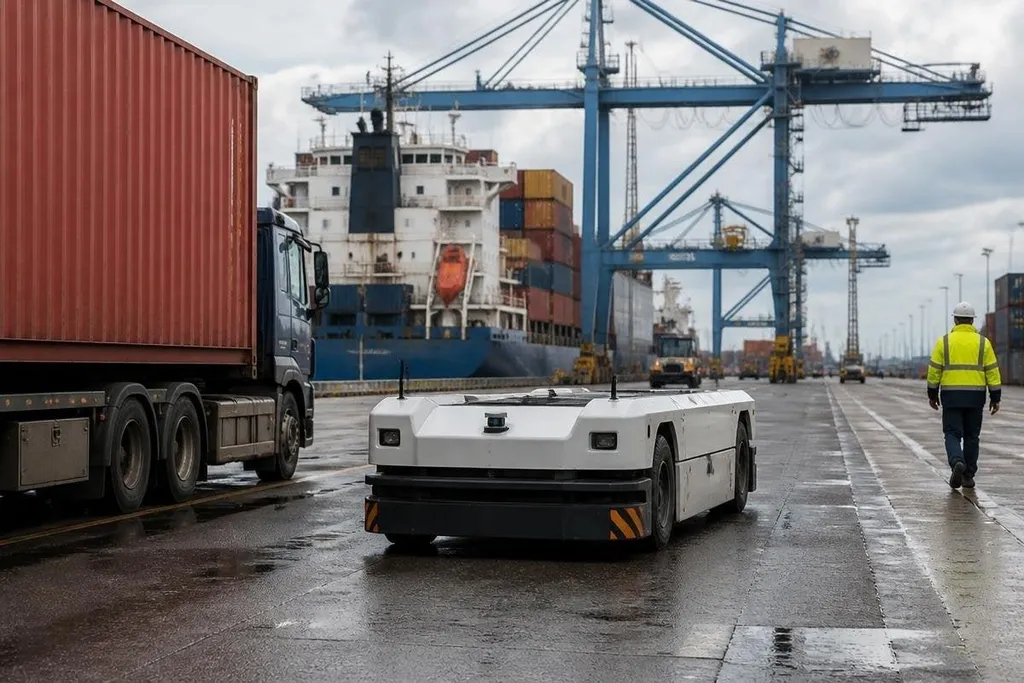
A port robot has to work around ships, trucks, cranes, containers, workers, weather, and changing schedules. That makes port automation a hard test for autonomous systems, especially when a failure can block a busy work area.
The useful question is which jobs robots can handle first, and what evidence would show that they are ready for wider use.
- Repeated yard moves are the clearest early target
- Remote control will remain part of many systems
- Safety checks matter as much as speed
Where robots fit first
Ports contain many tasks with repeatable paths. Moving a container between marked points, checking equipment, reading container numbers, and carrying supplies all follow rules that software can represent.
That does not make these jobs easy. A vehicle still has to detect a person, react to a blocked lane, handle poor visibility, and stop when the map no longer matches the ground. The best early task is one with a fixed route, clear boundaries, and a safe place to stop.
Container movement is the obvious place to look, but the robot does not need to replace a full crew to be useful. A system that handles one part of a trip could let a human operator focus on loading, inspection, or an exception that the software cannot read.
The control system matters
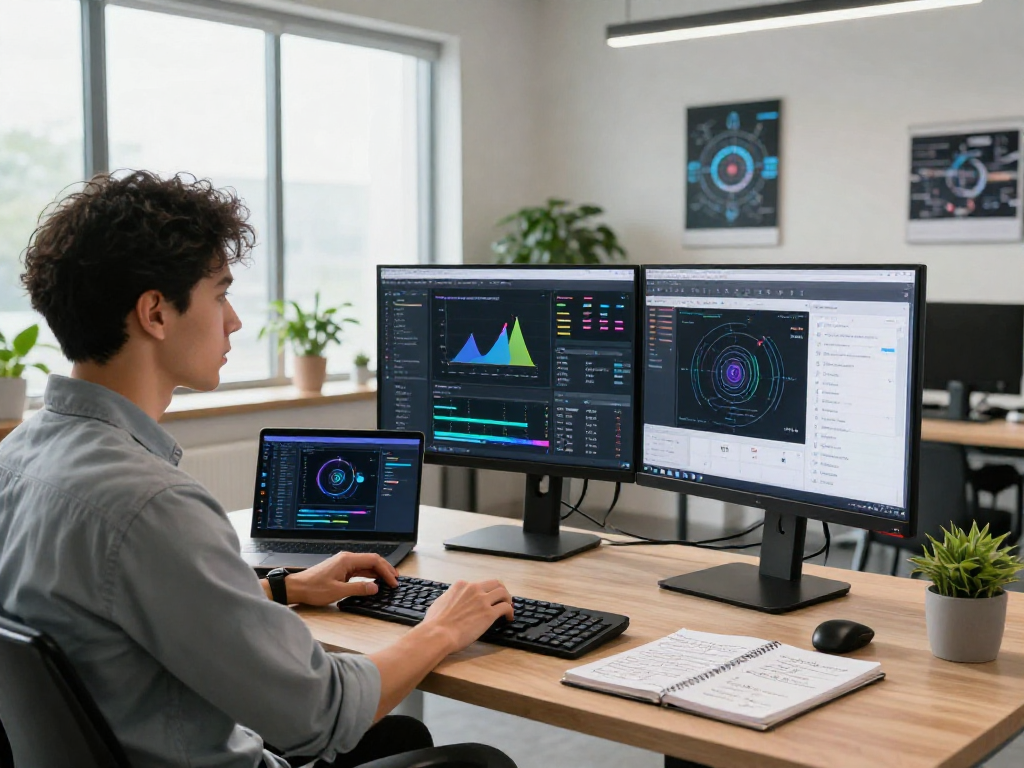
Port robots will need more than cameras and motors. They need software that connects their position, task orders, traffic rules, and safety limits. A remote operator may also need to take control when the robot meets a case outside its normal instructions.
That setup changes the job rather than removing human work at once.
One operator might watch several machines, but that only works when the system clearly shows which robot needs help and why. A delayed video feed or unclear warning can turn a small fault into a stopped lane.
At a port, a robot may cross truck lanes while cranes move overhead, so its report needs the task, site, traffic rules, and safety checks. Reports on port robots from Robot24 can tie those details to the machine’s actual work before weather and mixed traffic put more pressure on the system.
Weather and mixed traffic are hard limits
A port is an outdoor work site. Rain can cover a camera lens, wind can move light objects, and glare can change what a sensor sees. Salt air can also affect exposed parts over time, so maintenance belongs in the plan from the first trial.
Traffic creates a second problem. A robot may follow its map correctly while a truck, crane, or person changes the scene around it. Human workers also use signals and habits that are hard to turn into fixed software rules.
This is where many public robot demos tell you little. A short run on an empty route proves that the machine can complete that route under those conditions. It does not prove that the same system can work through a full shift with interruptions, weather changes, and equipment faults.
What a serious port trial should show
Without a named port, robot model, or trial report in the supplied evidence, no honest forecast can attach a price, success rate, or delivery date to this field. The next useful reports should show the work itself and the limits around it.
Look for these points before treating a port robot as ready for wider use:
- Named task: Check that the trial states exactly what the robot moved, scanned, or inspected.
- Operating area: Ask whether the route was active, closed, indoors, outdoors, or built for the demo.
- Human control: Find out when a remote operator took over and how long each handoff took.
- Safety record: Check the stop rules, worker separation, blocked-route response, and fault history.
- Maintenance plan: Look for inspection times, replacement parts, cleaning needs, and weather limits.
- Measured result: Compare completed work with the old process, including delays and failed runs.
Those details matter because a port buys dependable work, not a video of a machine moving once. A slower robot that stops safely may be more useful than a faster one that needs frequent human rescue.
The next test is ordinary work
I'd put my money on narrow port jobs before general-purpose machines. The first systems that last will likely repeat one route, work inside clear safety rules, and hand unusual cases to a person.
The open question is whether operators can show months of steady work in live port traffic. Until they do, port robots belong in carefully measured jobs, with the proof tied to every move they make.