

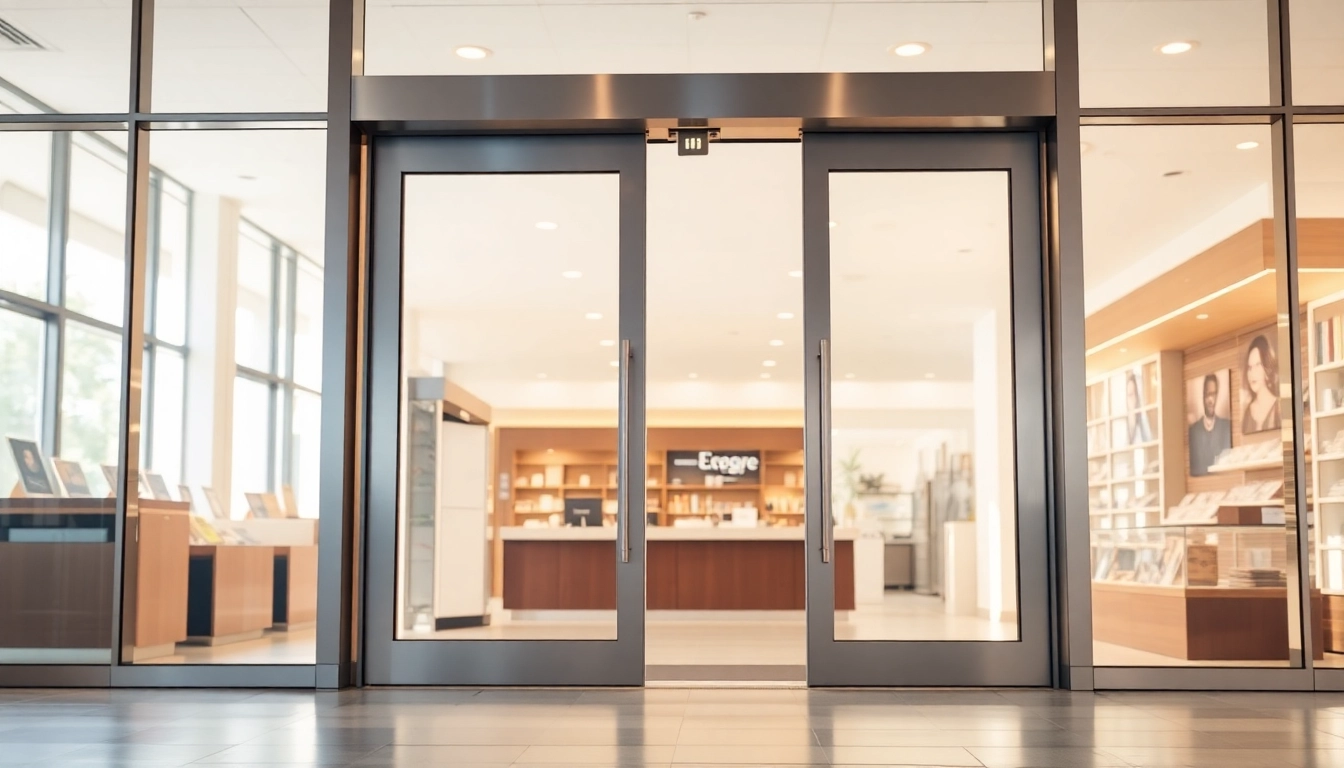
Understanding Commercial Automatic Doors
What are Commercial Automatic Doors?
Commercial Automatic Doors are specialized doors equipped with an automated operating system that allows for hands-free entry and exit. These doors use sensors to detect approaching individuals, often enhancing accessibility and convenience in various business settings. Commercial Automatic Doors can be found in hospitals, retail stores, office buildings, and more, adapting to high-traffic environments by providing smooth transitions that improve the overall customer experience. They can also serve as a security measure by restricting access until appropriately authorized.
Types of Commercial Automatic Doors
There are several types of Commercial Automatic Doors, each catering to a variety of applications and settings. The most common types include:
- Sliding Doors: These doors smoothly glide open and closed and are ideal for limited spaces. They can be single or double panel designs and are often seen in supermarkets and hotels.
- Revolving Doors: Designed for high-traffic areas, revolving doors allow multiple entrants at once while maintaining climate control within the building. They are commonly found in hotels and airports.
- Bi-Folding Doors: These doors fold open along a track, allowing for wide openings. They are often used in restaurants or any establishment requiring flexibility of space.
- Swinging Doors: These involve sensors that detect motion, allowing them to swing open automatically. They can be single or double doors, used in various commercial establishments.
- Telescopic Doors: Consisting of multiple panels that slide open to a wider entrance, these are perfect for narrower spaces where a wide opening is needed.
Benefits of Installing Commercial Automatic Doors
Investing in Commercial Automatic Doors presents a multitude of benefits, including:
- Enhanced Accessibility: Automatic doors provide effortless entry for individuals with disabilities or those carrying heavy items, fostering an inclusive environment.
- Improved Customer Experience: Customers appreciate the convenience of not needing to open doors manually, hence improving foot traffic and user satisfaction.
- Energy Efficiency: These doors minimize the loss of conditioned air, helping companies reduce energy expenses by keeping their heating or cooling systems efficient.
- Increased Security: With integrated access control systems, businesses can enhance their security by permitting only authorized individuals through the doors.
- Reduced Wear and Tear: By mitigating physical contact, automatic doors can extend the lifespan of door materials and mechanisms.
Key Features of High-Quality Commercial Automatic Doors
Durability and Maintenance
High-quality Commercial Automatic Doors are designed to withstand heavy use and environmental factors. Constructed from durable materials such as aluminum or reinforced glass, they maintain functionality and appearance over time. To ensure longevity, regular maintenance is essential. This can include periodic inspections, lubrication of moving parts, and prompt repairs of any components that may be worn or damaged.
Safety Features in Commercial Automatic Doors
Safety is paramount when it comes to commercial environments. Many Commercial Automatic Doors come equipped with several safety features, including:
- Motion Sensors: Sensors can detect movement and adjust the doors’ operation accordingly, ensuring they do not close on unsuspecting individuals.
- Emergency Override: In the event of an emergency, commercial doors often have a manual override option that allows them to be opened by hand.
- Anti-Collision Systems: Some doors are equipped to stop closing if an object is detected in their path.
Energy Efficiency and Cost Savings
Energy efficiency is a defining feature of contemporary Commercial Automatic Doors. With technologies that minimize the loss of heated or cooled air, businesses can enjoy significant cost savings on their energy bills. Moreover, government incentives for sustainable building practices may also mitigate installation costs as firms transition to more energy-efficient systems.
Choosing the Right Commercial Automatic Doors for Your Business
Assessing Your Business Needs
Before choosing Commercial Automatic Doors, businesses should assess their specific needs. Factors such as foot traffic levels, desired aesthetics, and security requirements should all be considered. A detailed analysis can help determine the appropriate type and model, ensuring that the investment aligns with operational demands.
Comparing Styles and Designs
Different styles of Commercial Automatic Doors can greatly affect the overall look and feel of a space. For example, glass doors enhance visibility and transparency, while solid doors offer greater privacy and security. It is crucial to consider the architectural style of your building and your brand’s image when selecting a door style.
Working with Contractors for Installation
Engaging a professional contractor for the installation of Commercial Automatic Doors is essential to ensure accuracy and adherence to safety standards. Contractors can assist not only with the installation but also with understanding building codes and regulations. Their expertise can lead to a smoother installation process, minimizing disruptions.
Best Practices for Operating Commercial Automatic Doors
Regular Maintenance Tips
Successful operation of Commercial Automatic Doors hinges on diligent maintenance. Scheduling regular inspections, cleaning sensors, checking alignment, and adjusting thresholds should all be part of a maintenance routine. Keeping a maintenance log helps track issues and repairs, ensuring that doors function seamlessly.
Addressing Common Issues
Despite being reliable, Commercial Automatic Doors can encounter problems. Common issues include misalignment, slow response times, and sensor failures. Identifying these issues early through consistent monitoring can lead to swift resolutions, reducing downtime and cost implications.
User Training for Safe Operation
Proper training on the use of Commercial Automatic Doors ensures safe and effective operation. Employees should understand how to operate the doors manually in case of emergencies, recognize sensor indications, and learn about features designed to prevent accidents. Regular training sessions reinforce safe practices and operational efficiency.
Future Trends in Commercial Automatic Doors
Innovations in Door Technology
Technological advancements are transforming Commercial Automatic Doors. Innovations such as smart sensors, AI-driven analytics for usage tracking, and automated accessibility features are increasingly becoming prevalent. These technologies aim to improve efficiency and user experience significantly.
Integration with Smart Building Systems
The future will see more integration of Commercial Automatic Doors with building management systems. This includes automation that adjusts door behavior based on building occupancy, environmental conditions, and emergency protocols, providing a seamless and responsive experience for users.
Environmental Considerations
As businesses become more environmentally conscious, the demand for sustainable and eco-friendly automatic door systems is rising. Utilizing recycled materials, energy-efficient motor systems, and sustainable manufacturing processes is integral to manufacturing the next generation of Commercial Automatic Doors.
Frequently Asked Questions
What are the maintenance costs for Commercial Automatic Doors?
Maintenance costs typically include regular inspections, part replacements, and cleaning, which can range anywhere from $200 to $600 annually, depending on usage.
How long do Commercial Automatic Doors last?
With proper maintenance, Commercial Automatic Doors can last between 10 to 20 years, with some high-quality models exceeding this lifespan.
Are Commercial Automatic Doors energy-efficient?
Yes, many models are designed to minimize air leakage and come with energy-efficient motors, contributing to overall energy savings for businesses.
Can I install these doors myself?
While some may attempt DIY installation, it is highly recommended to use a professional contractor to ensure compliance with safety standards.
What industries can benefit from Commercial Automatic Doors?
Industries such as retail, healthcare, hospitality, and office environments can all benefit greatly from the accessibility and efficiency provided by these doors.